Keeping Chickens Newsletter June 2017

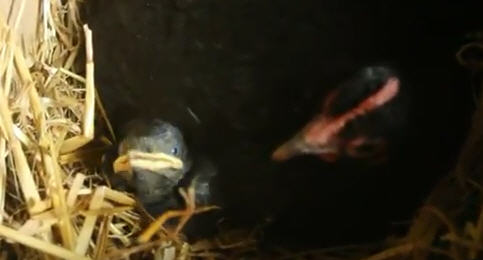
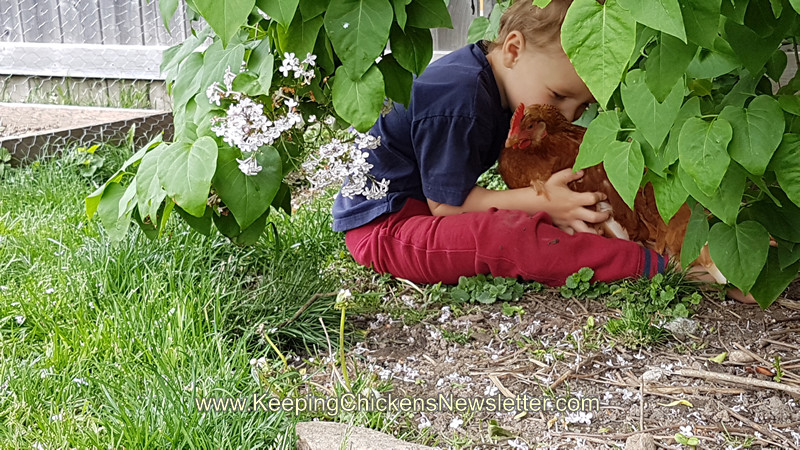
Broody Hen adopts a baby Jackdaw

Sue : I wonder if your readers would find this interesting? We all know broody hens are amazing but this seemed exceptional to me. A baby jackdaw came down our chimney and one of my broodies adopted it. All the very best, Pavlovafowl aka Sue

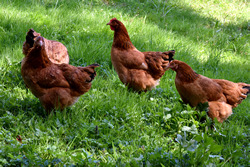
Pecking Order – A Flockumentary

John : Thanks for the chicken newsletter, always interesting and informative. I thought of it again recently when I went to see a New Zealand film called : “Pecking Order”, about the Chicken, Bantam and Pigeon Society in Christchurch. It was about the society’s involvement in the national championships, but also about the struggles for dominance within the society, hence the title. It had a lot of very bad puns and was very funny.

The Pecking Order Movie website https://www.peckingordermovie.com/

A Bullied Hen and a Small Cut

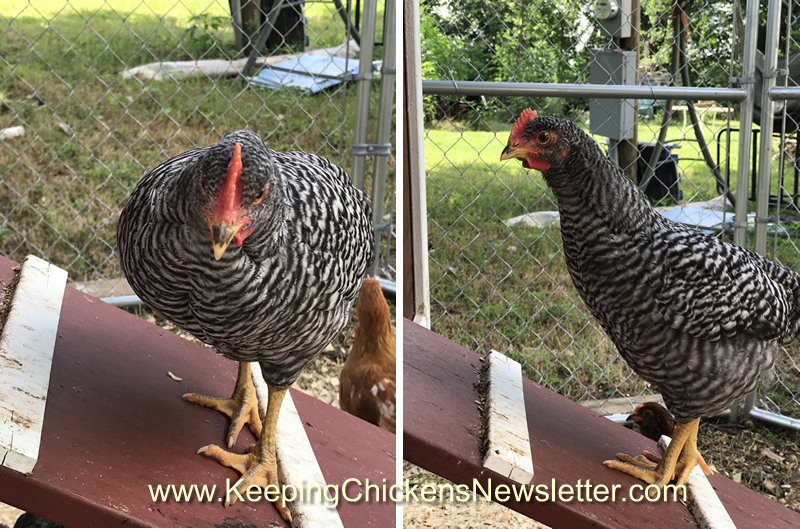
Naomi :  My family has six chickens. One of them (Patterns) has a cut under her nail on one of her claws, it makes her limp a little but other than that she seems fine.

We cleaned it and made sure it didn’t get worse for the first day but she kept deliberately covering it in dirt again. Is there anything we can do to help her with it or should we just trust her instinct and let her cover it in dirt?

A chicken in my flock gets attacked and chased, her name is Pecky and shes very gentle around everyone in my family. We started out with 4 chickens and than bought 2 more. Pecky was one of those 2 and has been bullied from the beginning. I’ve tried just giving it time but I don’t think it will make a difference because the other chicken that we got at the time have become a true part of the flock and fit in as if they were always there.

I get really worried about her and sometimes she flies onto my shoulders to get away from the others. I really hope that she starts to fit in but do you have any tips about what to do to help her?

My Reply : It would probably be better to keep the wound clean if you can to help prevent it from getting infected. There is a product called vetrap (and a few similar ones) which can make bandaging chickens easier as it kind of sticks to itself (there is a video on the blog about treating bumblefoot http://successwithpoultry.blogspot.co.uk/2009/09/bumblefoot-chicken.html which shows someone cleaning and wrapping a chickens foot).
With regards to Pecky if she is being kept away from the food and water (a common thing which can happen when being bullied) it can help to have extra food and water bowls in different areas as they can’t guard everything at once. There are some anti-peck sprays which may help deter some of the pecking if that is what they are doing and a few general tips for ‘entertaining’ chickens are on the blog here http://successwithpoultry.blogspot.com/2009/03/keeping-chickens-entertained.html which may help a bit by giving them distractions. If they are pecking it is possible that they have an urge for more protein in their diet and Pecky just happens to be the unlucky one at the bottom of the pecking order they are taking it out on (black oil sunflower seeds as an occasional treat can sometimes help with that). In a past issue a subscriber recommended standing on guard with a water gun to squirt the attacking chicken during an attack as a kind of aversion therapy (a bit time consuming but apparently it works). If Pecky is ever bleeding she should be removed until healed because blood can attract pecking from everyone else in the group and chickens can be relentless. If things still don’t improve another thing you might want to try if there is one particular ring leader is a temporary separation whilst still being able to see / hear everyone – sometimes removing a bully hen for a few days can make her lower down the pecking order when she returns to the flock and that might help if others were just following her example (the removed hen doesn’t necessarily have to be kept on her own – she could have a friend or two with her). Other general things to watch out for are parasites such as lice, mites and worms – if Pecky is weakened from something like that the others might be picking up on that weakness and that could add to her being picked on (if she does have parasites they all will, but some get affected more/quicker).

Naomi’s Reply : Patterns is still determined to cover her wound in dirt but it is working and she isn’t limping any more, she seems happy about it so we will just leave her alone. Pecky seems to be fitting in fine, the water gun seems like a good idea but if it doesn’t work she does still get food and water so it won’t kill her, she gets plenty of attention from us humans so she doesn’t act as lonely any more, hopefully she will get better and more social.

Ways To Stop Hens From Eating Their Eggs

Joan : hello, thank you for all your newsletters. I have four two year old chickens in the last few weeks they have consistently eaten eggs as soon as they lay. I have put in extra grit piles. Any suggestions or cure would be appreciated. Many thanks Joan Cawley

My Reply : Egg Eating often starts with an accidental breakage which can lead to your hens finding that they quite like the taste and deciding that they no longer want to share their eggs with us. Once the habit has started it can be a hard one to break.  Other than the taste of the eggs they might also have a nutritional urge for them if they are not getting enough dietry protein and/or calcium, so ensuring that they are eating a balanced feed and healthy treats would be one of the first steps (if giving treats things like black oil sunflower seeds and dried mealworms have quite a high protein content and so could be quite helpful, oyster shell can help with calcium).  There are a few popular methods for stopping hens eating eggs – mostly involving some kind of trickery so that they either find they can’t eat the eggs or they don’t want to – ideas include things like placing false eggs into the nest box, or making them taste bad, some people have also had success with scraps of white paper on the ground masquerading as bits of egg shell.

Some Ways to Prevent Egg Eating

    • Collect eggs promptly. The faster eggs are collected from the nesting boxes, the less time they have to try to eat them. If you have multiple chickens they will likely be on individual laying schedules, so the more frequently you can get to your coop to collect eggs, the less likely your chickens are to start eating them.
    • Provide your chickens with enough dietary protein and calcium. One of the reasons chickens might start eating their eggs is due to a lack of protein in their diet (or if they are particularly partial to the egg shells, calcium). By eating their own eggs, they could be trying to make up for protein/calcium they are missing. Make sure that you are feeding your chickens a complete feed that contains all necessary vitamins and minerals, and not giving them too many starchy treats.
    • Don’t allow eggs to break. Once an egg breaks, their natural curiosity will soon have your chickens  eating the yolk and white inside. To prevent broken eggs, use plenty of soft bedding in your hens’ nesting boxes.

Some Ways to Stop Egg Eating

  • Replace eggs in the nest with something inedible. If your chickens have begun eating their eggs, replace their eggs with golf balls or wooden eggs (or even coloured plastic eggs as one subscriber had success doing). Your chickens should realize that they can’t eat these “fake” eggs and hopefully will then stop eating their own.
  • Replace egg insides with something unsavory. Another strategy to combat egg eating is to fill an already broken egg with something like spicy mustard or hot sauce. Your hens will probably not like these condiments and within a few days will hopefully be put off from eating their own eggs in the future.
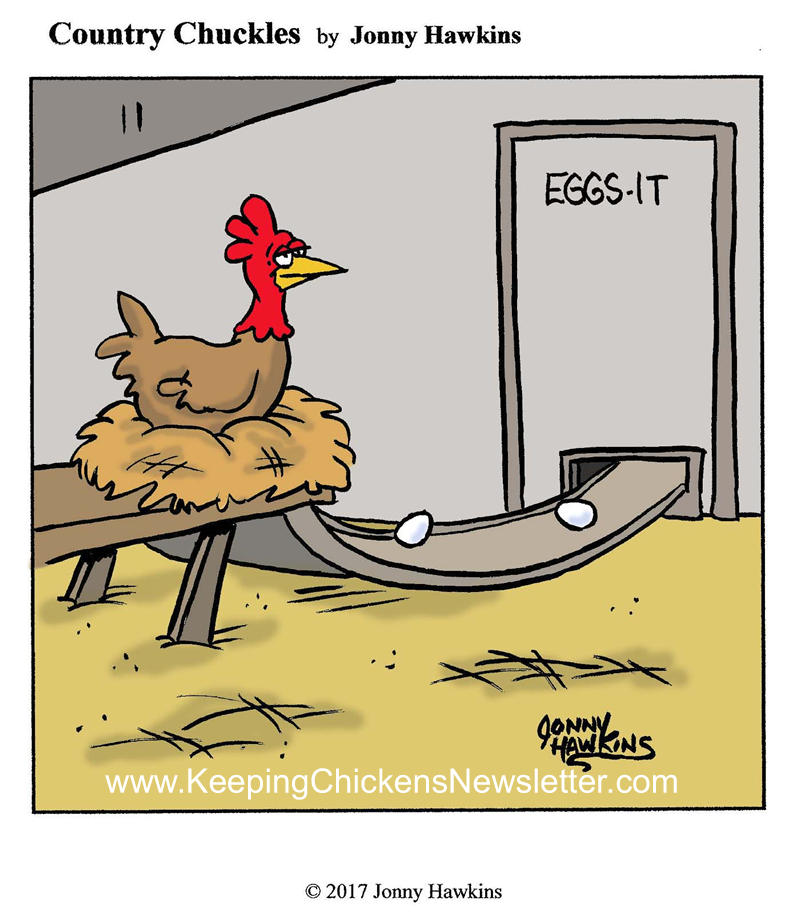
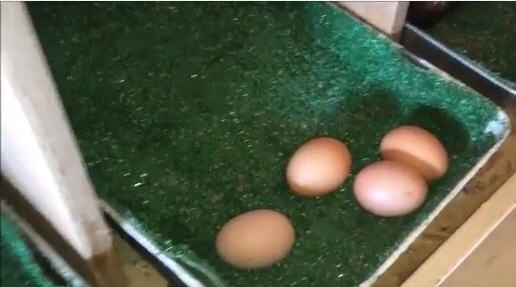
  • Build or buy a rollaway nesting box (such as the one shown in the video below). A rollaway nesting box is built on an angle which allows fresh eggs to roll down a ramp to safety, removing all temptation. If it is practical to adapt or replace your nests for rollaway ones it can be an easy way to make sure that you are the one who gets to eat the eggs 🙂

Egg eating is indeed a frustrating habit but with a bit of strategy and luck it can be nipped in the bud – good luck!

To Free Range or Not To Free Range

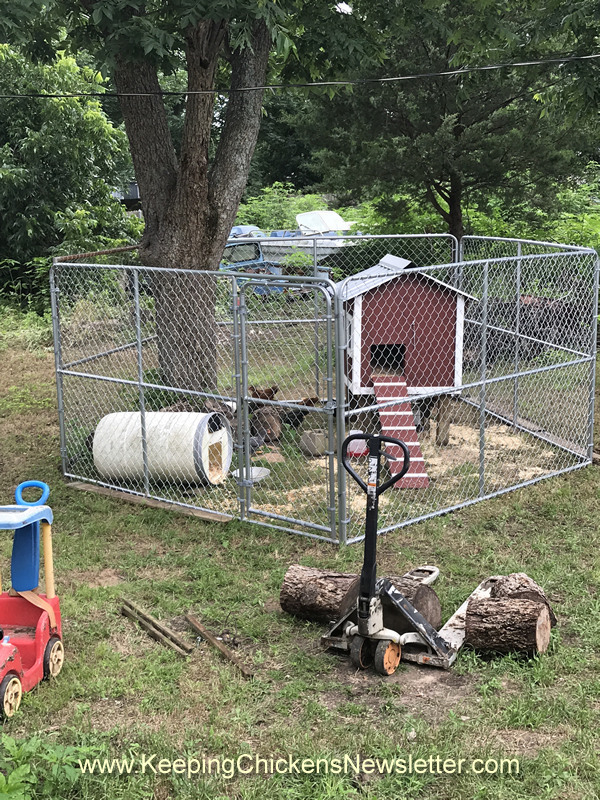
Barb : I rescued 5 chickens about a year ago and sadly, I am down to 2. All three of the chickens that I lost were due to the fact that my chickens free-range during the day. One was taken by a hawk one was taken by a fox and one was taken by a farm Patron whose dog escaped his car and chased down and killed one of my girls. I am really struggling with how to proceed as far as the type of Lifestyle I offer my chickens. I loved the fact that they free ranged our property and I felt like they were happy picking around the garden and the flower beds and eating the bugs and worms. Any time my husband was out tilling the soil in preparation for our planting they would join him there and eat the worms and bugs that he turned up but with all of these deaths I am afraid to let them out again. On the other hand I don’t think that I could feel good about keeping animals caged up for the rest of their lives even though The Henhouse and the run that we had built for them is very roomy. I understand that this is the circle of life, it’s just very difficult because I become very attached to my chickens. I would like to hear your response and perhaps what others have to say about this dilemma. Thank you, Barb

My Reply : I’m sorry to hear of your losses it is horrible to lose them like that. There are definitely more risks to free ranging but even those keeping their chickens in a henhouse and run can experience losses to predators because very little is ever 100{b0ded004bdc346b73b2f7c5643ec4b44c0fd04baf547e743db44006f5c758b8f} safe. The risks of free ranging can be minimised by fencing the perimeter and providing lots of cover (trees, bushes, bales of straw etc.) which makes it harder for hawks to swoop in and also gives your flock hiding places and flying up to places to get out of the way of ground predators (I’m guessing you probably do have some sort of cover as you only lost one at a time). With two hens a rooster could be more of a hindrance than a help (hens can get sore backs from being mated too much) but for larger flocks a rooster can provide some protection (he would do his best anyway, but it is not always a fair fight) and a livestock guardian dog may also be an option.

I also love to watch mine pecking around the garden but realised the other day that they don’t actually use very much of the space they have – most of it is only used by them to walk to one of their other favourite areas. Recently I did have to keep mine in their pen due to the bird flu restrictions, and even though it wasn’t set up for them how I would have liked (their pen is only really for a bit of extra safety before they go to bed/get up) they seemed quite happy – I think it was me who was the most upset. A lot of the things chickens like to do when free ranging can be done from a roomy henhouse and run so I am sure that yours would adapt to it quite happily if you felt that the risks of free ranging had become too high. With mine I know they (I?) would be happiest if they had a pen where they had somewhere to perch (most of their perching is done in their coop entrance or on a bench they have inside their pen so that is already sorted), somewhere to dustbathe, an area that catches the sun (I have one that sunbathes at every opportunity) and a bush to stand/sit under (I don’t know why but it seems about half of their day is spent just standing / sitting under a bush by the pond!)

Go to Top