Some handy tips and good ideas.

Making A Supplement More Appetizing

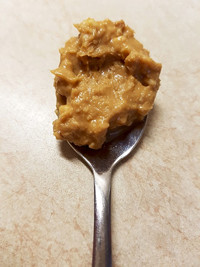
Louise : Here is a quick tip I thought might help someone else. I wanted to give my chickens a ‘tasty’ herbal supplement – unfortunately their view of tasty was not the same as the manufacturers and they refused point blank to eat any of it. So to avoid it being a complete waste of money I broke up some bread into tiny pieces, mixed the herbal supplement into it and then added a spoonful of peanut butter. It was a sticky mess, but I managed to mix it all together and roll it into small balls (smaller than a grape) and the chickens loved them – very messy but worth it. I am sure peanut butter and bread are not ideal foods for chickens due to the salt content but my girls definitely enjoyed their little treat 🙂

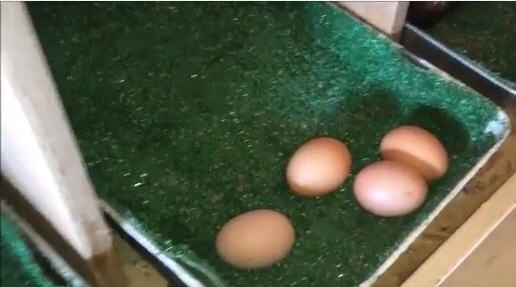
Pete : Hi Gina, Thanks for the newsletter. We are still loving everything about our flock and are even considering adding a few more next spring. The older girls have started to slack off laying. This is because of the shorter and cooler days now. We don’t mind, they have earned their rest. God has created them to only lay eggs during the time of the year when their chicks would most easily survive. So we are getting fewer eggs but still about a dozen or more a day.

Anyone For Chicken Sexing?

George Anderson : We all have wobbly bits. Clear differences between our wobbly bits make it easy – for those interested in that sort of thing – to tell man from woman. This is not true in the world of chickens.

I don’t know whether you can study to become a professor of chicken sexing. What I do know is that determining chicken gender is far more difficult a task that you might imagine.

Does chicken sexing matter? Yes, if you are commercially involved in rearing chickens. In fact the practice will be essential to the success of your enterprise. If you are breeding for eggs you will have no need of male birds and their early identification allows you to eliminate them as soon as possible. If you are breeding for meat as well as eggs then you’ll want to know as soon as possible how to separate the two so that you can treat them differently within your supply chain.

There are two main methods for sexing chickens: feather and vent. In feather sexing, the length of wing feathers is considered a reliable means to determine gender. The wing tip feathers are noticeably larger in hens.

The vent method is less glamorous by a country mile. This involves a two-step process. First squeeze the poop out of a young bird. Then look for a pimple sized bump which would indicate maleness. Apparently this is still difficult, even for professors of chicken sexing (if there are any).

Pinned down by people bigger than me and forced to choose, I know which method I’d prefer. Mainly because if I were down the pub of a lunchtime and asked what I did for a living I would be comfortable saying “I compare evolutionary gender differences in the feathers of now flightless birds.” This has to be more appealing than saying “Me? I squeeze poop out of chickens”

In the science-free past, it fell to folklore to offer methods for chicken sexing. Here’s my top half dozen.

1. Guessing: This gives you a 50-50 chance of being right but is no basis for running a commercial poultry business.

2. Penny Rubbing: Rub a penny on the back of a chicken. Toss it (that’s the penny, not the chicken). Heads it’s a rooster, tails a hen. Hmmm.

3. Shape: Round egg = hen. Pointy egg = rooster

4. Hat method: Wave a hat over a bunch of chickens then throw it to the ground. Only hens will run away. Personally this is simply an abuse of a perfectly good hat.

5 Ring dangling: Put a gold ring on a chain and dangle it over a chicken. If the ring starts a circular motion it’s a hen. In a line, it’s a rooster.

6. Water Method:
Two bowls, one with water, the other with water to which has been added a teaspoon of vinegar. Roosters will drink only from the plain water bowl.

7. Mischief Method: Select a chicken. Dip your partner’s head into a horse trough when they least expect it. If they’re angry when they emerge gasping for air, it’s a rooster. This method has been largely abandoned since it led to skewed results and a spike in the divorce rate.

Ways To Stop Hens From Eating Their Eggs

Joan : hello, thank you for all your newsletters. I have four two year old chickens in the last few weeks they have consistently eaten eggs as soon as they lay. I have put in extra grit piles. Any suggestions or cure would be appreciated. Many thanks Joan Cawley

My Reply : Egg Eating often starts with an accidental breakage which can lead to your hens finding that they quite like the taste and deciding that they no longer want to share their eggs with us. Once the habit has started it can be a hard one to break.  Other than the taste of the eggs they might also have a nutritional urge for them if they are not getting enough dietry protein and/or calcium, so ensuring that they are eating a balanced feed and healthy treats would be one of the first steps (if giving treats things like black oil sunflower seeds and dried mealworms have quite a high protein content and so could be quite helpful, oyster shell can help with calcium).  There are a few popular methods for stopping hens eating eggs – mostly involving some kind of trickery so that they either find they can’t eat the eggs or they don’t want to – ideas include things like placing false eggs into the nest box, or making them taste bad, some people have also had success with scraps of white paper on the ground masquerading as bits of egg shell.

Some Ways to Prevent Egg Eating

    • Collect eggs promptly. The faster eggs are collected from the nesting boxes, the less time they have to try to eat them. If you have multiple chickens they will likely be on individual laying schedules, so the more frequently you can get to your coop to collect eggs, the less likely your chickens are to start eating them.
    • Provide your chickens with enough dietary protein and calcium. One of the reasons chickens might start eating their eggs is due to a lack of protein in their diet (or if they are particularly partial to the egg shells, calcium). By eating their own eggs, they could be trying to make up for protein/calcium they are missing. Make sure that you are feeding your chickens a complete feed that contains all necessary vitamins and minerals, and not giving them too many starchy treats.
    • Don’t allow eggs to break. Once an egg breaks, their natural curiosity will soon have your chickens  eating the yolk and white inside. To prevent broken eggs, use plenty of soft bedding in your hens’ nesting boxes.

Some Ways to Stop Egg Eating

  • Replace eggs in the nest with something inedible. If your chickens have begun eating their eggs, replace their eggs with golf balls or wooden eggs (or even coloured plastic eggs as one subscriber had success doing). Your chickens should realize that they can’t eat these “fake” eggs and hopefully will then stop eating their own.
  • Replace egg insides with something unsavory. Another strategy to combat egg eating is to fill an already broken egg with something like spicy mustard or hot sauce. Your hens will probably not like these condiments and within a few days will hopefully be put off from eating their own eggs in the future.
  • Build or buy a rollaway nesting box (such as the one shown in the video below). A rollaway nesting box is built on an angle which allows fresh eggs to roll down a ramp to safety, removing all temptation. If it is practical to adapt or replace your nests for rollaway ones it can be an easy way to make sure that you are the one who gets to eat the eggs 🙂

Egg eating is indeed a frustrating habit but with a bit of strategy and luck it can be nipped in the bud – good luck!

Peeling Hard Boiled Eggs

By Christina Raving

It never fails. A person is new to keeping backyard chickens with their daily laid eggs. They love hard boiled eggs, and just know that the freshest eggs will taste so much better than store-bought. So they boil some up right from the hen’s nest. And when it comes to peeling them, to getting at the tastiest eggs they could ever imagine- it’s darn near impossible without utter carnage!

A diagram of the parts of the egg. a, The blastoderm. b, The shell. c, The outer shell membrane. d, The inner shell membrane. e, The air-sac at the large end of the egg. f, The albumin. g, The chalaza. h, The yellow layers of yolk. i, The white layers of yolk. k, The flask-shaped portion of white yolk. l, The vitelliac membrane.

There is a biological reason behind this. When you look at a diagram of the anatomy of an egg, there are two membranes between the shell on the outside and the albumen, or egg white. When an egg is good and fresh, the gas-permeable membranes between the shell and the albumen are tightly adherent to allow the developing embryo to breathe. It takes 7-10 days after laying for the egg to die.

Did you ever notice that all store-bought eggs are easily peeled when they are hard-boiled? That’s because they are all at least two weeks old. I remember an expose long ago of a large grocery chain that had the practice of taking eggs past their stale date, putting them in new cartons, and putting them back out for sale. Even when you buy premium, free-range, organic eggs, they will never have printed on the carton the date they were laid. It will always say, “Date processed”. You simply cannot buy eggs as fresh as your backyard hens can produce for you. And don’t even get me started on the industry definition of “cage free”. My hens roam freely throughout my yard; they’ve never seen a cage in their life!

So forget all those remedies for peeling an egg. Don’t waste vinegar or an ice bath. Simply hold those eggs in your refrigerator for 10 days before hard boiling. You are still going to be ahead of the game in freshness and taste. Then one last technique I would want to impart is to crack then roll them gently on the counter before you peel them. After that, you should have no problem.

How to boil the perfect egg every time:

1. Immerse the eggs in cold water in a pot.
2. Discard any eggs that float to the surface.
3. Cover the pot and bring it just to a rolling boil.
4. Turn off the heat and move the pot to the side.
5. Immediately set your kitchen timer for 15 minutes.
6. At the end of 15 minutes, drain the eggs, peel and eat.

Chicken Diet Supplements

Rin : Happy healthy chickens! We treat our girls and two boys (who’ve lived together since they were chicks – they don’t fight each other and actually are quite close ❤️) to diet supplements of natural yoghurt, live maggots, lots of greens (lettuce, cucumber, spinach, cabbage, cauliflower) and a tablespoon of apple cider (Hic) vinegar every so often in their water to improve their general health and gizzard digestive health!

Anyone else got any diet supplement tips?

Rin
Heron way Community Allotment – Feltham

Do Chickens Need Fresh Water Every Day

Linda : Is it imperative for chickens to have clear fresh water every day or can they get sick from it not being changed? In the winter time we set a heated dog water dish out for them and in the summertime we have a hanging bucket that’s covered and has the self watering nipples on the bottom. Thank you so much.

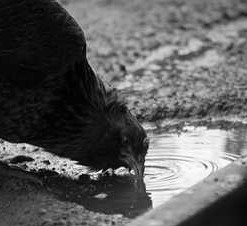
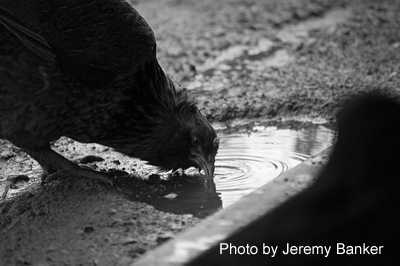
My Reply :  Chickens can get sick from drinking dirty water so any left for them should always be clean. It is often easier said than done to keep them drinking only clean water as many chickens seem inexplicably drawn to kicking mess into their waterers and drinking out of dirty puddles when they get the chance to. Whilst a covered hanging bucket as you have should keep the water free from any mud, poo or other debris it may itself need cleaning quite regularly as water containers tend to build up a residue after a while. If the water is left unchanged in containers for days on end it can get a bit stagnant and then the bacteria builds up which potentially could make them sick. As a general rule, even if it looks clean, it should be changed every day – two at the most.


Hard To Peel Hard Boiled Eggs? – Steam Them

Allison : Hi Gina. Being new to keeping chickens I have a lot to learn. I have had two girls for around six weeks now, both are laying, one starting a week after the other. The eggs are small but beautifully formed and very delicious. My problem is that when I hard boil them I cannot get the shells to come off cleanly, always fetching quite a lot of white with it. Is there a lack of something in their diet that causes this? Any advice would be gratefully received BTW the girls are free range having a run of around 15 square mtrs, they have access to the garden daily for a couple of hours before roosting time. Thanks Allison

My Reply : It is probably a good sign 🙂 The freshest eggs are usually the hardest to peel (and if the shells were soft, it may indicate something like a lack of calcium in their diet). Fresh boiled eggs are usually easier to peel if you steam them – a subscriber offered details in the September 2011 issue here : https://www.keepingchickensnewsletter.com/Newsletter/september11/keepingchickensv2_pg06.htm Hope that helps!

Fred’s Varmint Trap – How To Make A Live Trap

large dog standing in live trap

After the above photo of Freds varmint trap appeared in last months keeping chickens newsletter I received several requests for building instructions which Fred has very kindly given (download below).

instructions for building live trap

To download, point your mouse over the above image and press the right mouse button (or alt and left click if on a mac). Select ‘save target as’ (or similar worded option) and save to your computer.

You might also find these tips for detecting and deterring predators useful which were given by newsletter subscriber Jackie from her experiences with chicken snakes, rats, raccoons, coyotes, chicken hawks, wild bobcats, and abandoned dogs.

Telling the sex of chickens

Mart : Just want to share what I heard from two different sources on telling the sex of chickens.

The picking a chick up by the scruff of its neck between two fingers was different than I understood the letter in the May issue to describe it. The following is the way I understood it and so far it has worked for me in conjunction with the other method for chicks several days old.

The pullets will hang their feet.
The little cockerels will kick and try to fight.

Those that go in between I leave at the store as I am after pullets only right now and don’t want to risk one that doesn’t kick that holds it’s feet up being a cockerel.

The second method is when the tails start to show the pullet will have longer tail feathers than the cockerels, the opposite of adult birds. One friend of mine swears by the picking them up by the nap of the neck and they hang their feet that they will always be pullets. This is how she gets pullets from straight run chicks saving money as the pullet selected chicks are always more expensive. I found this helpful even in pullet run chicks as the sexing process is only 90-95{b0ded004bdc346b73b2f7c5643ec4b44c0fd04baf547e743db44006f5c758b8f} accurate. Happy sexing chicks for everyone.

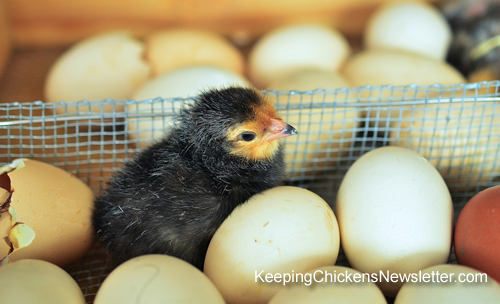
baby chicken

Method for Sexing Chicks

Ann : I enjoy reading your newsletter. I’m new at raising chicken, although my mother had chickens when I was a child. I have three buff orpingtons and two black sex-links. I decided I wanted chickens for the fresh eggs. They are very friendly chickens. I wanted to share something. I heard my mother say the way to tell the sex of a baby chicken. (hen or rooster). Gently pick up the baby chick by the neck and hold between two fingers for a few seconds. If the chick is a hen, she will draw her legs up to her belly, if the chick is a rooster the chick will hold the feet straight out.

===A variation of this method is given here https://www.keepingchickensnewsletter.com/may14v2/telling-the-sex-of-chickens.htm

Go to Top