Keeping Chickens Newsletter March 2008

Tool Shed Chicken Coop

Thanks to Lisa Silver Frankel for these photos!

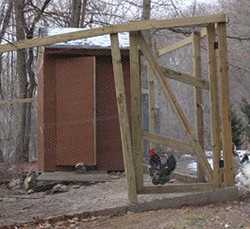
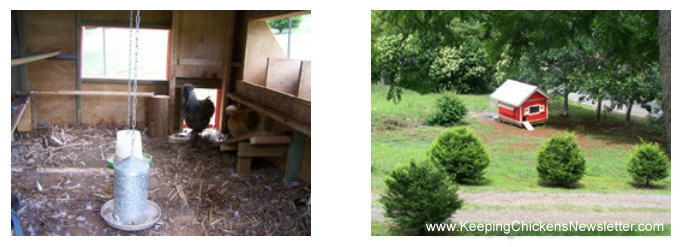
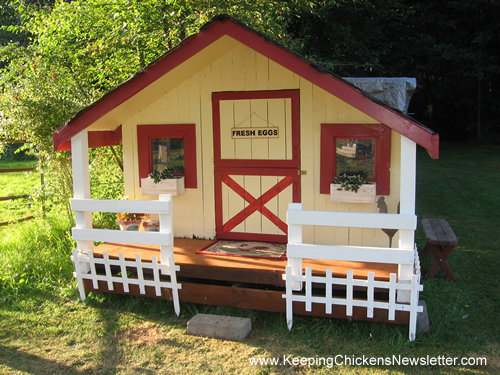
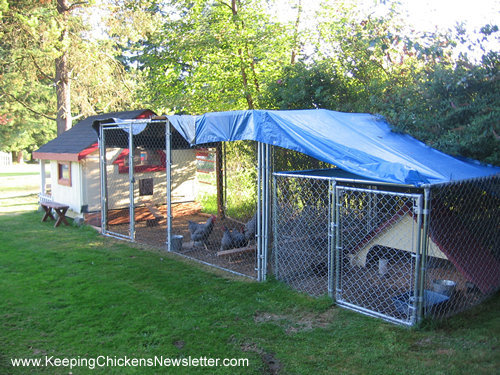
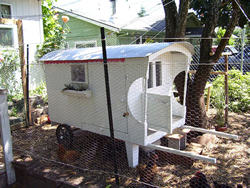
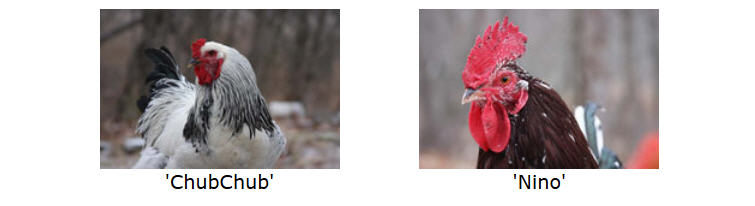
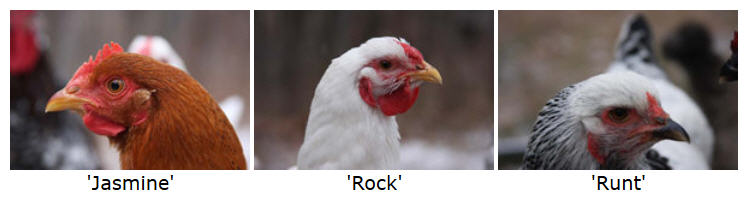
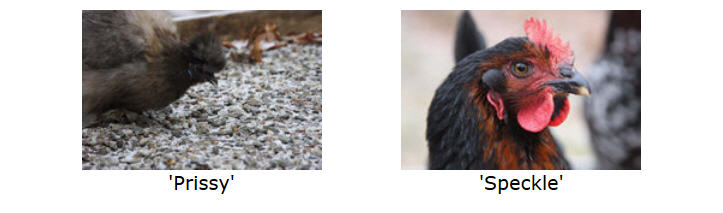
“This past summer, our family decided to raise chickens. We built a coop and a run. We purchased, what we thought to be eight hens. A gal in a neighboring county sold them to us. The chicks were 2 months old, except one 12 month old, when we got them. Later, two of our hens turned-out to be roosters. Since all are named, none of them will wind-up in the soup pot.
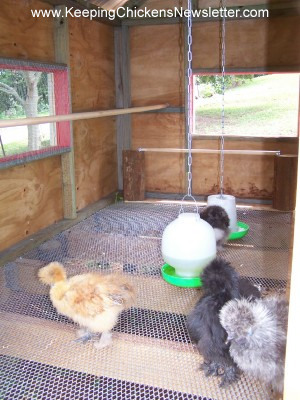
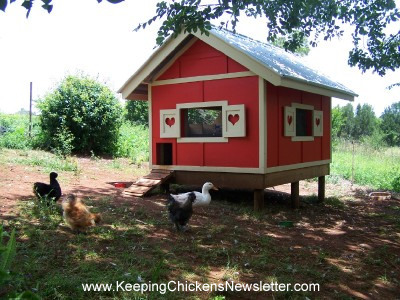
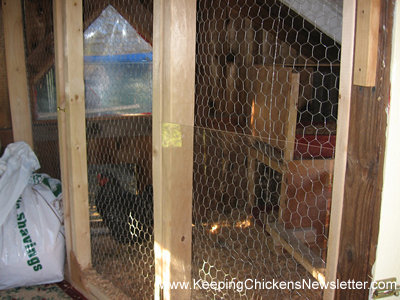
Here are a few pics of the coop we built. Note that the inside contains a ladder on one side and an array of 12″ (h) x 12″ (d) x 12″ (w) (2 x 4) cubbies on the other side. The reason why the structure is vertically oriented, roughly 4′-0″(d) x 6′-0″(w) x 7′-0″(h) is that, my husband wanted to construct it as a tool shed, just in case we proved poor chicken farmers.

I am happy to say, (knock on wood) raising chickens continues to be successful.
Readers Reply

Hi Gina,

I read the latest edition and I was quite saddened especially with the Jim Tucker story. Ever since I can remember chickens have always been in my life. As a child I would spend my summers at my Grandparents house and most of the time I was outside with the chickens. To understand chickens you really need to take some time to get to know them and see how fascinating they really are. I always joke and say that chickens are the only ones that thank God for another drink (If you have chickens you know what I mean how they take a gulp and then look up and say Thank you to God)

Anyway, I can go on about how chickens are great pets but what saddened me the most is that I have chickens and my area it is not zoned agriculture. You don’t know how fearful I am every time I get a new neighbor. What if they call zoning on me? I just don’t get it. A barking dog or a cat house are ok but an animal who not only gives eggs but ultimately gives their life to their master can not be kept except for out in the country.

I think that is wrong. My chickens will never know a premature death. Rather my chickens provide me with eggs, and die when they are very old of natural causes. Why have them then? Well, they are my girls. They provide me so much happiness when they hatch chicks, care for them, and even to see each of their antics. Each of them is very special to me.

I just wanted to share this with you! Great newsletter and Thanks for all the photos.

Mr.John-Elías Padilla
2nd Grade VE Classroom Teacher

Gypsy Wagon Coop

Thanks to Carol Akins for these photos of her ‘gypsy wagon’ coop.

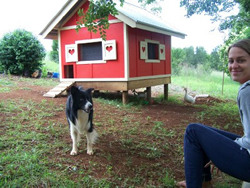
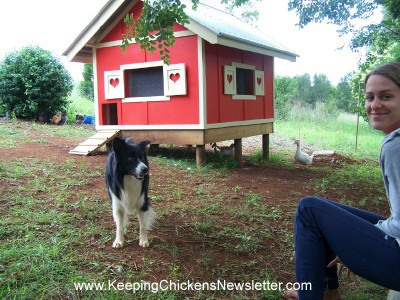
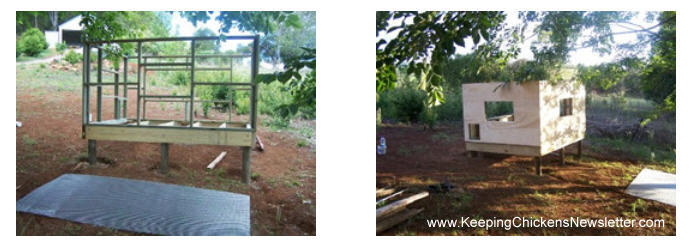
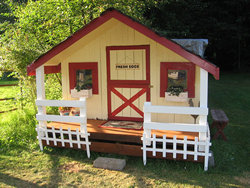
“I built my ‘Coop’ last year. It’s requirements was that it could be moved from the place I was building it to my yard, then 6 months later moved as I built a new house for myself. I thought and thought about it and looked at a lot of coop plans. Then the Idea hit me. I would build a 1/2 scale gipsy wagon! Everthing is exactly half the size of the average wagon. I only started to paint the fancy stuff when the weather turned bad.

I am awaiting this spring to finish the designs on it. I would be glad to tell anyone else how I designed it. I used a lot of 2 x 2’s and 1/2 inch plywood except for the roof which is 1/4 inch plywood.

My two turkins and my cochin bantam love their home, especially the struts as outdoor perches. You see the 3 nests at one end and the feed and water at the other end inside. The base is 3ft by 6ft and the wheels are 14″ wheel barrow wheels.”

Chooktopia

Thanks to Isa Menzies for this detailed account of her Journey to CHOOKTOPIA 🙂

“After moving to a quarter-acre block in Canberra’s Ainslie, I decided it was time to realise my dream of having chooks. It took a few months to convince my partner that he shared my vision, but eventually he got on board, and Chooktopia represents the fruits of our (but mostly his!) labours, taking 4 months of off-and-on weekend work. Thank you Clinton you are a star!

Recycled corrugated iron sheets are dug in to around 40cm, to prevent foxes from digging underneath. They are then affixed to star pickets.

The basic frame (including laying box, LHS) is constructed from recycled timber and corrugated iron pieces. These were left over from a shed that was on the block when we bought it, and which Clinton dismantled.

More corrugated iron was attached to the frame to form the structure, which has an insulated ceiling, and “home made” wall insulation, in the form of rags stuffed into the curves of the corrugated iron! The floor and ceiling are simply sheets of masonite.

To make the frame of the chook yard, 2 x 3m lengths of PVC polypipe were joined in the middle and then attached to the star pickets, creating a lovely arching structure. (Witness me being helpful!)

The PVC was then wired together, to create an even stronger framework, over which we draped chicken wire. Overall, around 50 metres of 900mm-wide chicken wire was used.

The laying box features a hinged door, so I can access the eggs without having to enter the enclosure. This is in the rear of the box, rather than the more usual top of the box, to allow enough room for the overhang of the corrugated iron roof within the enclosure.

Next step was the door, which Clinton constructed beautifully out of new timber and pet wire (like chicken wire but with a finer weave). It is attached with two strong hinges to prevent it sagging in the future, and bolts onto a piece of wood attached to the pole you can see behind Clinton.

Here we see the structure in its entirety, with Clinton adding a few finishing touches.

The next step – to add chickens!

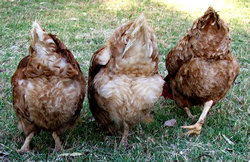
I saw an advertisement by a woman selling rehabilitated ex-battery hens, and we thought it would be a great way to start our venture, so we brought home two crossbred white hens. We will also hope to add a couple of Australorps soon.
The next day, which was quite warm and sunny, we noticed that they were quite keen on the shady areas of the run, so we added some shade-cloth, which you can see here. Eventually we will grow a deciduous vine along this side, which is the northern aspect, to allow them plenty of sunshine in winter time.

In this pic you can also see the inside of the coop, which has wood shavings on the floor and cherry branches for perches. The first night the chickens slept together in a laying box, so to discourage this we blocked them off at night, and added a temporary ramp up to the perches. They got the hang of it within a few days, and now perch happily.

Chooktopia indeed!”

Subscriber Photos

Valerie Rose “My sweet back yard birds have been having a daily about 6 hour jaunt in my 14 x 25 ft garden, and after a good hoeing, they have turned over everything I hoed, and eaten all the bugs, and most of the left over veggie stuff that we won’t eat… and esp appreciated is the eating of the hundreds of calendula seedlings that have popped up. I hope some survive… but if they don’t, I know they are only a note to a neighbor away. They are extremely prolific plants and I am sure some have jumped my fence.

The chickens are now producing 4 – 6 eggs every single day. I am hoping to trade my free range, happy chicken eggs for a bit of room on a neighbors huge yard plot to continue my quest to be as self sufficient as possible in my inner city living space (and grow enough tomatoes and strawberries to hold us through next winter).” 🙂

9 Chicks Hatched – 7 are Roosters!

Keith, Jennifer, Christy and Paula McLaughlin “Last summer, my family took our trip back to my grandfather’s farm in North Carolina and brought back 14 fertile eggs to set. Having no hen, we got an incubator and produced 9 out of those 14 eggs. They are Bantam and Game mixed. The only thing is that we hatched 2 hens and 7 roosters!! Can’t get many eggs that way, right?? So a church member donated 4 Rhode Island Red setters to our desperate cause and we forged on.

We returned to the family farm for New Year’s and brought back more eggs to set. This time we brought back eggs crossed between Araucana hens and a grey Bantam rooster. We also set eggs from our home flock, Rhode Island Red hens and Bantam Game mix roosters. Our second hatch bitties are now three weeks old and live in a produce crate from the local Dollar General store.

We have it in the dining room under the table where everyone checks on them through out the day. It started out as a fun project for the family but now we sell the eggs and have even inspired other families around us to use the incubator and produce their own home flock. Thanks for inspiring us and helping us with your newsletter.

Diary of A Poultry Keeper ~March~

“The tide of eggs is steadily rising, and what are not required for breeding should, when fertile, be sold for incubating purposes. A big business is done in eggs for hatching and the price will vary from twice to six times the figure got for commercial eating eggs. March is a very busy month between looking after chickens, continuous hatching and the disposal of surplus eggs.

Fertile eggs that go by post or rail require very careful packing. Special boxes may be bought for that purpose, and great care should be taken to see that the eggs are packed tight so that the contents will not be unduly shaken.

If the weather is mild let the chicks out of doors as much as possible, but never go away and leave them. A sudden storm of hail or snow might lose you the lot. Even a heavy rain-storm will kill young chickens. All your incubators should now be going in full blast and light breeds should be hatched from now onwards to the end of April. Be it remembered that it is now or never with the hatching of heavy breeds. Better also to be a fortnight too early than a week too late with light breeds. Time steals away like a thief in the night, you can never catch it up again.

Do not coddle the chicks; it is wonderful how they do in dry, cold weather, but do not allow them to get wet.”

Go to Top