
Keeping Chickens Newsletter October 2017

Making A Supplement More Appetizing
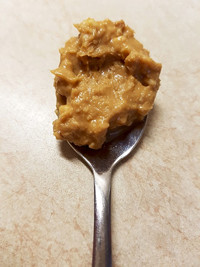
Louise : Here is a quick tip I thought might help someone else. I wanted to give my chickens a ‘tasty’ herbal supplement – unfortunately their view of tasty was not the same as the manufacturers and they refused point blank to eat any of it. So to avoid it being a complete waste of money I broke up some bread into tiny pieces, mixed the herbal supplement into it and then added a spoonful of peanut butter. It was a sticky mess, but I managed to mix it all together and roll it into small balls (smaller than a grape) and the chickens loved them – very messy but worth it. I am sure peanut butter and bread are not ideal foods for chickens due to the salt content but my girls definitely enjoyed their little treat 🙂
Pete : Hi Gina, Thanks for the newsletter. We are still loving everything about our flock and are even considering adding a few more next spring. The older girls have started to slack off laying. This is because of the shorter and cooler days now. We don’t mind, they have earned their rest. God has created them to only lay eggs during the time of the year when their chicks would most easily survive. So we are getting fewer eggs but still about a dozen or more a day.
Fall Birds
Sophie : We are about a month into our new business venture – well if you can call raising meat chickens that. I am not sure that we will make enough money on them to even call it a business! Nonetheless, we are raising another round of 38 chicks. Some are already sold and some are for our own freezer.
 We have never grown them out at then end of the season like this. Normally we buy them in the spring. It will be interesting to see if they grow out faster since they don’t have the heat to deal with. I am hoping that is the case. It seems that they literally grow overnight. We are hoping to butcher these at about 10 weeks. That puts us in the middle of November. We are hoping that the weather will still be mild enough that we won’t have to deal with cold hands or snow! Sunny 40 degree days without any wind would be ideal. We’ll see if we get that.
I am anxious to get some chickens in our freezer! Especially since our garden didn’t give us enough to can or freeze this year. I am feeling a bit nervous about our stocks of food. I suppose we can live on chicken and rice all winter if we have to.
Back in September we got in a batch of meat chicks. This is the first time that we have raised and butchered meat birds in the fall. We have learned some things along the way. I think that we can actually get them earlier. We were worried about the heat of summer in August. That is really a silly thing because chicks need it to be warm those first few weeks. Getting them earlier would also result in butchering earlier. Butchering at the end of November could be a bit chilly most years. I also think that it takes a bit more feed to get them to the weight we want them. I haven’t put the pencil to it yet but it’s my gut feeling. I just don’t feel like they gained as quickly. I know that we will try raising fall birds again as long as people want to buy them. We will just think about doing things a little differently.
Automatic Chicken Door HOWTO by Adam Monsen

This is the story of four chickens who meet a hungry little furball and quickly become a flock of one.
This is the story of … The Chicken Who Lived.

In the video further down this page Adam explains how he created a raspberry pi-powered chicken door using only Free Software. The basic outline is that he is using a Raspberry Pi and light sensor to trigger the door to open and shut. A Raspberry Pi is essentially a small computer with built in wifi etc that has been created to promote the teaching of basic computer science in schools and is used to learn programming through fun, practical projects – the basic Raspberry Pi startup kit costs around $50. It checks in with a light sensor every 10 minutes before triggering the door to shut (or open) if the light level has gone below the level he set. He also uses a Fisheye night vision camera (which itself only costs $25) to take video inside the coop, even at night, and has it take and send a photo to give a visual confirmation when the door has been opened or shut. In his talk he mentioned that it can be logged into seperately and forced to shut, and can be used offline. The Raspberry Pi itself is very flexible and this is almost more a case study of how it can be used to create your own automated hardware+software systems than a how to build an automatic chicken coop door.
Parts Summary
1. Raspberry Pi, motor, sensors
2. Scrap wood, string, magnets
More specifically : Raspberry Pi, Soldering kit, Camera, Wires, 12v DC motor, Fuses & holder, 32gb SD card (not 64gb as it seemed to cause problems), Mag sensors, Test leads, Power supply – His total cost for this project (although some things such as the soldering kit could be reused) was $213
In the talk he covers these features :
- hardware interleave gravity lock mechanism
- instant-read photoresistor poll door actuation trigger
- photoresistor signal analog to digital conversion
- worm gear 12V DC motor controlled via L9110 motor driver chip
- dual hall-effect magnetic door position sensors
- fallback door status mitigating magnetic sensor failure
- night-vision wide-angle camera with motion-triggered video capture
- C + bash + python polyglot control code with standardized output convention
- offline operation with 2.4Ghz wifi for monitoring and maintenance
“I’m a hardware beginner, so this is a beginner talk in terms of hardware. I know just enough about hardware to ask someone smarter how to not make everything start smoking.
I’ve been writing software for about 20 years, so I want to get into some detail about the software.
This talk isn’t about carpentry–you’ll have to ask my wife about that.” ~ Adam Monsen

The Coop was built inside a larger shed – you can just about see the computer sitting on top of the coop on the right.


The door uses a gravity lock. The strings lower the whole door as one unit and when they get to the bottom the two bottom pieces of wood swivel out and slot into place so the door cannot be forceably opened.
You can watch Adams full 25 minute talk below :
Automatic Chicken Door HOWTO by Adam Monsen is licensed under a Creative Commons Attribution-ShareAlike 4.0 International License. He has provided his source code for this Raspberry Pi project here https://github.com/meonkeys/rpi-chx-code
Links* to Parts Used
Raspberry Pi 3 model B with clear case by Vilros (USA | UK | Canada)
Adeept starter kit (USA | UK | Canada)
Fisheye night-vision camera (USA | UK (the particular one Adam used does not seem to be available on the UK Amazon site but plenty of similar alternatives are) | Canada)
Solid hook-up wire kit – 6 colors dispenser box (USA | UK | Canada)
25rpm 12V DC worm gear motor (USA | UK | Canada)
0.3A glass fuse & holder (USA | UK | Canada)
bag o’ hall effect (magnetic) sensors (USA | UK | Canada)
bag o’ test leads (wires with alligator clips at ends) (USA | UK | Canada)
SanDisk Ultra 32GB microSDHC UHS-I Card (USA | UK | Canada)
12VDC 600mA regulated power supply
* The above are links to the parts Adam used in this project. In some cases it may not be possible or desirable to get exactly the same products due to stock levels, newer releases, price changes or availability in your country but as they are quite standard parts suitable alternatives should be quite easy to find if desired. www.keepingchickensnewsletter.com is a participant in the Amazon Services LLC Associates Program, an affiliate advertising program designed to provide a means for sites to earn advertising fees by advertising and linking to amazon websites. If you end up purchasing an item after clicking through one of the links I may receive a small commission. It will not cost you anything extra at all but would be very much appreciated as even small amounts can help offset some of the costs involved in producing and giving away a free online newsletter. Thank you.
Keeping Guineas and Chickens Together
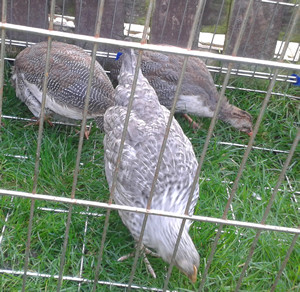
Sue : Hi Gina, I have been given 4 guinea fowl chicks but I think one of them is a chicken, I already sent a message to you but I’m emailing so I can attach some photos. Can you take a look at the photos and let me know what you think about the pale grey bird I think is a chicken, I really hope it’s not a cock, we had to give our other cockerel away to a farm because he was too noisy for the neighbours. We also have 3 old hens, two are 11 years old the third is 7 years old. The 2 older ones don’t lay anymore the 7 year old lays occasionally. They don’t seem to like the guinea fowl chicks at all, is there anything I particularly need to know? The guinea fowl are currently living in a hutch inside the chicken pen so they can get used to each other. I would like to ask everyone if they have any experience of keeping hens with guinea fowl. We’ve put them together a couple of times but the hens weren’t impressed at all and kept pecking the chicks. I guess they’ll get used to each other eventually but has anyone any advice? Thank you

My Reply : Thanks for the photos. Guineas can come in quite a variety of different colours but the body shape and comb does also make me think it is a chicken. With regards to them living happily together it definitely is possible. In the Guide To Guineas ebook there were a couple of examples of some who had done so and I’ve also been searching through a few past newsletters where several readers have mentioned that they have guineas in their flock. I haven’t found any specific integration tips that might be helpful to you – but also no major problems mentioned either. There have been a variety of pecking orders mentioned – one said her young hens are the boss when it comes to the pecking order and who gets priority when roosting, another also had Turkeys in her flock and it was those that were at the top of the pecking order, then the Guineas and then the chickens, whilst another said her Guineas had kept themselves completely separately from her chickens. Guineas can be a bit more ‘wild’ than chickens and if they are upset for any reason tend to chase down the object of their displeasure as a pack – often this would be along the lines of a chicken rooster getting himself into trouble for trying to mate with a guinea roosters hen (it is possible for Guineas and chickens to breed with each other although any resulting chicks will be sterile). Guineas are more inclined to roam and generally can fly a lot better than chickens so will naturally roost in trees but can be trained to use a coop (and will be safer from predators if they do). As with probably the majority of all animals and birds the potential for any problems is a lot less when there is plenty of room to segregate themselves if they wish to and also if there are no hormonal males trying to compete for their girls attentions.
Does anyone have any advice?
