Keeping Chickens Newsletter July 2017

Chickens in Summer – Keeping Chickens Cool in a Heat Wave

Regular readers of the newsletter will have already seen some cooling tips in past issues such as these ‘Tips for Cooling Down in Hot Weather‘ and will hopefully have noted several ways to make sure your chickens are comfortable and healthy when the temperature rises. This time around, we want to discuss a bit futher how to ensure the well-being of the flock at the height of Summer.

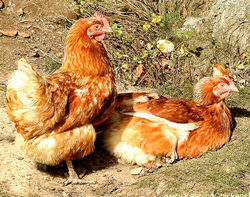
sunbathing chickens

Chickens like sunny warm weather. They can often be seen sunbathing. As it gets warmer they might stretch out their wings and pant mildly. It’s their way of regulating their temperature. This is natural behaviour and should not cause concern. What is more concerning is if they start to show signs of heat stress such as excessive panting, very floppy pale combs, listlessness, iridescent green poop, eating very little but drinking several times their normal amount of water (leading to Diarrhea, more dehydration and more loss of electrolytes).

Shade

As we know the domestic chicken evolved from the Jungle Fowl. So why, some people ask, should backyard chickens have a problem with heat? The answer is simple — though jungles are hot they are also extremely well shaded. And shade is one of the key areas where flock-keepers can help their birds during hot spells.

One of the most obvious and effective actions to take in Summer is to provide shade. You cannot provide your birds with mini chicken-friendly parasols, but you do need to keep them from direct sunlight (and if you do have a parasol handy, maybe it could be fixed up somewhere near them?). Natural shade generally comes from trees and bushes and so when planning ahead consider building runs or free range areas near trees or growing tall bushes and plants in and/or around the run. If natural shade is unavailable, one option may be to drape a sheet over the run (but be sure not to block out any chance of a nice breeze). You may keep the covering damp with an occasional spray of water. Also think what else you may have around and could improvise with – old tables and chairs for instance.

And remember, your chickens are not as daft as you might think. Free-spirited free-rangers will seek out shade on their own. Just be prepared to find them in some odd places — places like cold-frames, sheds, or under bushes and old wheelbarrows – but do keep a check on them to be sure that the shade they have found for themselves is keeping them cool enough.

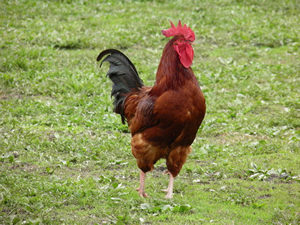
little bit of shade

Water

Of course you should provide fluids, and there are a variety of ways to do this. Plain clean fresh water is the number one priority, and they will want to drink cool water more than warm so changing it regularly throughout the day can help with that. Additional ideas include adding ice cubes and chopped vegetables or fruit such as cucumbers or grapes to extra water bowls to provide an entertaining means of getting more fluid into them –  treats of frozen fruits and vegetables on their own can also be cooling.

Place drinkers in shaded areas – remember that containers of all kinds (but especially metal) will get very hot if left in direct sunlight.

Frozen bottles of water can be placed somewhere shaded for your chickens to stand near to help reduce their body temperature and a wading pool can also be effective. Having a mister in the run and/or a fan in the coop are other ways some will help their chickens cool down in extreme heat.

hens drinking from a watering can

Treating Heat Stroke

Despite taking all precautions you may occasionally have to deal with a bird made unwell by the heat. With heat stroke the body starts to shut down and serious damage may have been done to the internal organs. The earlier it is caught the better the chances of recovery are and the first step is to try to cool your chicken back down.

Common methods for cooling down are to gently lower her into a bucket of cool water – it should not be cold, just a little cooler than normal body temperature as cold water could cause her to go into shock. Another method along those lines would be to put a few inches of cool water into a paddling pool (or sink or bath etc) and gently wet her down. Or you could get a towel or t-shirt, dampen it with cool water and lay it on the floor in a shaded area and then lay the chicken on top and gently spray cool water over your chicken to gradually cool down.

Getting some liquids in will also help. When suffering from heat stress or dehydration adding electrolytes to their water can help them replenish what they have lost (plain water will be fine though if you don’t have any). A basic homemade electrolytes recipe is to mix together 500mls Warm Water, 2 tbsp. Brown Sugar (or Honey or Molasses), 1/2 tsp. Salt and 1/2 tsp. Baking Soda. Some can be encouraged to drink themselves by dipping their beak a little into a bowl of water. If that is not possible then you may be able to give them some by sticking your finger in the water and then touching it on to the beak, below the nostrils, so a few drops at a time will run in. Using a syringe, if you have one, would be another way – but only give a small amount at a time.

If your hen was in the early stages of heatstroke then she may be up and about and able to go back with the rest of the flock within a few hours of being cooled down. If the heatstroke was more serious she will need to be given her own hospital area somewhere cool where she can recover. She may not be able to stand or walk or eat or drink on her own to start with and it may be several days before improvements are noticed – and it can take several weeks to recover fully in bad cases (some may never be completely back to their old selves).

If there is a heat wave be sure to check on your chickens regularly to make sure the heat has not become too much for them, and to ensure their water is cool and any misters, fans, shaded areas etc. are all as working as expected.

flock in shade of fence

Two Eggs Laid By One Hen in One Sitting?

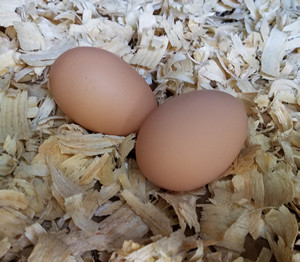
Ron : I enjoy all of your info about chickens. I am new at the game. I acquired 3 hens in April and they have been doing theirjob providing me with enough eggs that I need. But I suspect that my Buff Orpington is laying 2 Eggs at the same sitting. Is that possible? I occassionaly find 2 Eggs sitting side by side like the photo. Ron.

My Reply : I have heard of hens laying two eggs in the same day (several hours apart) but as far as I know it is not possible to lay two eggs in the same sitting – but if I am wrong it wouldn’t be the first time 🙂 It is a lot more likely that they are sharing the same nest box.

Will Roosters Fight

Carol : I have question about roosters. I have a rooster who’s 9 years old. He’s a good boy, protective of the hens and always clucks for them to eat. I hatched some eggs last October and I have a young rooster. So far he’s the low man on the totem pole. Arnold (the old guy) just looks at him and he runs away. If I go by Gary he also jumps away. He’s bigger than Arnold but so far hasn’t figured that out. Will the two fight? I’ve been told different things, that if a rooster is raised from chicks that they blend in better with the flock which keeps fighting to a minimum. But others have said that once the young rooster is mature he’ll start fighting. What’s your opinion? Any suggestions? Will they fight?

My Reply : They won’t necessarily fight. As he has grown up in the flock there already is a pecking order established which should help. Many single flocks do have multiple roosters – it seems less likely to be an issue when there is plenty of space and plenty of hens (on average 10 or more hens for every 1 rooster). Some roosters are naturally aggressive but yours don’t sound like they are the sort that would go looking for a fight. If a challenge is made in the future, as long they can agree on the pecking order they should still be able to continue to live happily together afterwards. 

Do Not Feed Chickens + Possible Bumblefoot

Tom :  Following the recent bird flu restrictions, I have had my chickens in a covered but smaller than usual enclosure. I was away most of the last month and only got them out into the wider open enclosure this week. One of my chickens seems slightly disabled as she walks around the paddock.  As she’s also the broody one it’s hard to watch her for long as she takes every opportunity to hide in the nest box.  I thought she might have scale leg, but when I came to treat her it was her feet that seemed to be the problem.  Not ever having had a case of Bumblefoot I didn’t know what to look for so I picked up the other apparently healthy one (both are Buff Orpingtons).  The limping chicken had no reaction when I pressed the ball of her foot, but the other closed her claw.  Neither foot looks particularly sore, although the non-limping one’s foot is the more pink in colour.

All the chickens have really dirty feet which I am slowly washing with warm soapy water.  The clag on the feet looks a lot like a dried mixture of mud and manure.  They seem to be responding the gradual cleaning.
 
Have you any suggestions? My friendly neighbourhood chicken “expert” thinks the lame one should be put down as she’s stopped laying anyway, but he used to keep them as a small business for eggs.  Regards Tom
 
My Reply : After cleaning their feet it may be possible to see a black scab like mark which would be the core of the bumblefoot. In a comment on this recent post https://www.keepingchickensnewsletter.com/april17/hen-with-swollen-feet.htm where the hens foot was swollen Melina pointed out that a chicken could have an infection inside the foot where we might not be able to see the opening because it is pinsized.  Mild cases of bumblefoot can sometimes be resolved simply by cleaning the feet as you are doing.  On my blog here : http://successwithpoultry.blogspot.co.uk/2009/09/bumblefoot-chicken.html there is a treatment which can be applied each day for a few days (but just cleaning and wrapping the foot as shown in the video on that page can also work in mild cases). There is a story from a subscriber of her experiences with removing more serious bumble foot here https://www.keepingchickensnewsletter.com/September12/keepingchickensv2_pg05.htm If it isn’t bumblefoot then your hen may have damaged her foot/leg in some way (landing heavily or walking on something sharp etc) or it could even be something like gout or arthritis.
 

Mite Problem

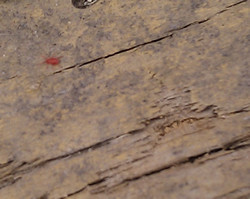
red mites on wood with crevices

Mites can live in the cracks and crevices of a wooden coop.

Peggy : I Think I have a mite problem in my run, what can I use to get rid of the mites that won’t harm my hens, I have 2 hens that are each setting on a couple of eggs and don’t want to endanger the chicks if they hatch. A friend said I could put out sevin dust, but I’m not sure how safe it will be for the hens. Thanks for any help you can give. Peggy Flatt

My Reply : People have successfully used sevin dust (which contains Carbaryl) with poultry in years past, and swear by it, but it has been banned in some countries (including the UK and Australia) over human health fears. There are many poultry pest products available, a lot of which are non-chemical – often they will have food grade diatomaceous earth as one of their ingredients (sometimes it is the only ingredient). If purchasing diatomaceous earth directly you must be sure to get the food grade kind (there is also a type that gets used in pools which is not animal friendly). A little goes a long way – it is very drying and although the food grade kind is safe for chickens and animals you don’t want to create a dust cloud in the coop that they will then be breathing in whilst sitting on the nest or get it into their eyes etc. (really, the same goes for any dusting product and when applying, gloves and masks are recommended). Food grade DE is a natural product and can be a good prevention and/or for mild treatments but if you have a major infestation you may need something a little more aggressive – there are several poultry mites treatments on the market and all will come with their own specific instructions for use. As mites tend to live in the crevices of the coop another natural ‘treatment’ is to clean the coop – I keep an old vacuum cleaner for jobs like hoovering around any crevices in the coop and then steam clean as well – in theory that should at least reduce the numbers of mites if any were hiding out in there.

Go to Top